
BondbloX
BondbloX Pte. Ltd.Finance
3.68.00 Reviews
- Version
- 6.70
- Installs
- 50.00K
- Age Rating
- Everyone
Screenshots
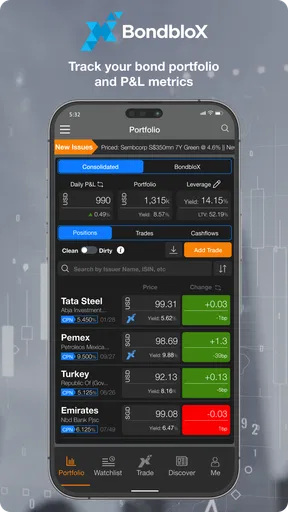
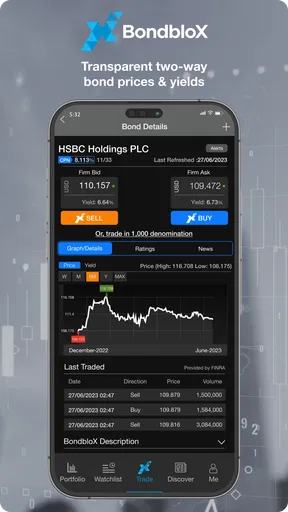
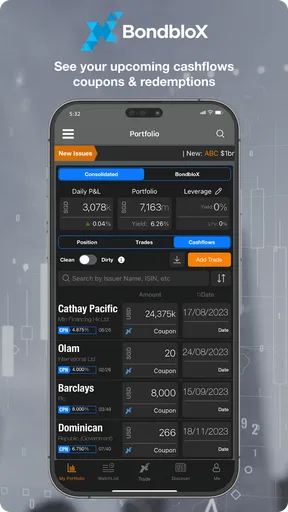
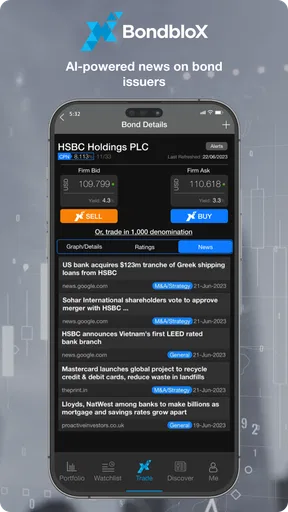
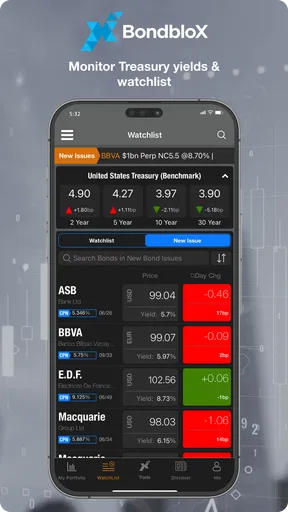
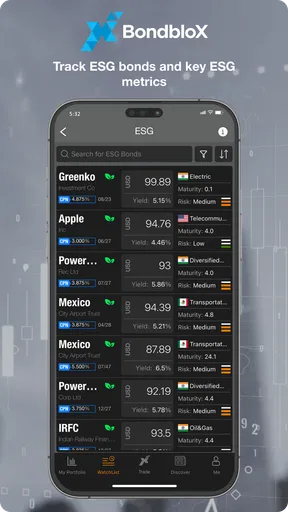
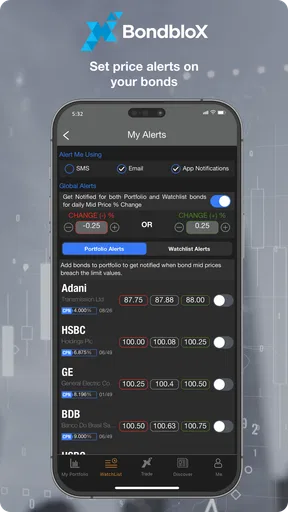
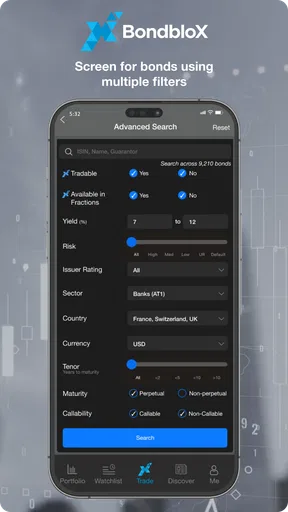
Our Review of BondbloX
 Analysis by Appyee
I approached BondbloX as a finance app for people who want to look beyond ordinary savings products and explore bond trading, market information, and analytics from a mobile device. My first impression was that it is aimed at a more focused audience than a typical personal-finance app. It is not mainly about tracking household spending or setting a simple savings goal. Its purpose is closer to helping users follow bond-related opportunities and make sense of information that can otherwise feel scattered.
That distinction matters. If you want a quick view of your bank balance, a budget planner, or a basic investment dashboard, this will probably feel too specialized. If you already have an interest in fixed-income investing, however, the app has a clearer reason to exist. I found its appeal strongest when I treated it as a research and monitoring companion rather than as a complete replacement for every financial tool I use.
What the first week feels like
The first week is where the app has the easiest time making a good impression. Bond information is often less familiar than stock-market content, and having a dedicated mobile space for bond trading, data, and analytics gives the subject a more deliberate feel. Instead of opening a general finance app and trying to find fixed-income material among unrelated sections, I can approach the information with a specific question in mind.
That question might be whether a bond deserves closer attention, whether its terms fit my plans, or whether market conditions have changed enough to justify another look. The app is most useful when I arrive with that kind of purpose. Browsing without a goal can make financial information feel like noise, especially when I am not yet comfortable interpreting bond terminology or comparing one opportunity with another.
I would not recommend treating the first session as a reason to invest immediately. A better starting routine is to spend time learning how the app presents its bond information, then write down the details that matter to you before making any decision. I pay attention to the identity of the issuer, the maturity, the income terms, the currency, and the risks that could affect the result. An app can organize information well, but it cannot turn an unsuitable bond into a suitable one.
The mobile format is convenient for short checks. I can use it when I have a few minutes during a commute or before reviewing my wider finances. That convenience is useful, but it can also encourage rushed decisions. A small screen makes it tempting to focus on the most visible figure and skip the surrounding context. My practical tip is to use the app for discovery and follow-up, then slow down for the actual decision.
One of the less obvious strengths is the way a dedicated bond environment can change my research habit. With a general investment app, I often compare whatever is most prominent at the moment. With a bond-focused tool, I am more likely to make a shortlist and revisit it. That shift from impulse browsing to deliberate comparison is valuable, particularly for someone who wants a repeatable process rather than a stream of market distractions.
Still, the learning curve should not be underestimated. The app may help bring bond-related information together, but the responsibility for understanding it remains with me. A newcomer who expects plain-language explanations at every step may need outside reading before feeling comfortable. That is not necessarily a flaw in the product, but it does affect how welcoming it feels to someone starting from zero.
The app is free to install and is intended for an Everyone audience, which lowers the barrier to trying it. It also includes purchases priced from around twenty-two dollars to around sixty dollars per item. That makes it important to distinguish between exploring the app and committing money to additional content or services. I would first establish whether its information fits my investing routine before paying for anything inside it.
Who gets the most from it
I see the clearest fit for an investor who already understands the basic idea of bonds and wants a mobile place to examine bond opportunities more consistently. It may also suit a financially curious user who is willing to learn, take notes, and verify important details instead of expecting the app to make decisions on their behalf.
It is less suitable for someone who wants a fully guided beginner experience, guaranteed returns, or a simple automated portfolio. It is also not the obvious choice for a user whose main need is stock charting, cryptocurrency monitoring, or everyday money management. Those users may find a broader investment platform more efficient because it keeps their preferred assets and tools together.
Whether the value survives from one month to the next
The first-week appeal is not enough for a finance app. Its lasting value depends on whether it becomes part of a sensible review habit. I would use BondbloX on a schedule rather than opening it repeatedly throughout the day. For example, I might review a shortlist at the start of the month, record what has changed, and then return when a holding or potential purchase reaches a decision point.
This approach suits bonds better than constant checking. The goal is usually not to react to every small movement. The goal is to understand the income, timing, credit considerations, and liquidity implications well enough to decide whether an investment belongs in a broader plan. The app becomes more useful when it supports that calm process instead of encouraging unnecessary activity.
A realistic everyday scenario would be a user preparing for a future expense. I might have money that I do not expect to need immediately, but I also would not want to treat it like high-risk trading capital. I could use the app to research bond possibilities, compare the information available, and decide whether the expected timing and risk fit my personal plan. I would still check the full terms and consider alternatives, but the app could serve as the place where I begin and organize that work.
A second useful workflow is keeping a decision journal. Each time I examine a bond, I can note why it attracted my attention, what concern stopped me, and what information would change my view. This is a simple habit, but it prevents a common mistake: returning to the same opportunity repeatedly without remembering what I already concluded. The app’s ongoing value is stronger when it is paired with this kind of personal record.
For month-to-month use, I would not judge the app by how often I open it. A finance tool can earn its place through a few meaningful sessions rather than constant engagement. If it helps me prepare better questions, compare options more carefully, and avoid decisions based on a single headline figure, that is recurring value even when the screen stays closed for several days.
The app’s published average rating is 3.6 from around two hundred ratings, with a smaller group of written reviews. I read that as a sign to keep expectations measured. It suggests that the experience is useful for some people but not universally smooth or compelling. I would try it personally before building an important investment workflow around it, especially if I depend on a particular interface or a very guided explanation style.
The current version is 6.70, and the app has been available since late 2017. That history is reassuring in one limited sense: this is not a brand-new experiment that appeared yesterday. At the same time, longevity alone does not guarantee that every screen will match modern expectations. I would pay attention to how quickly information loads, how clearly details are arranged, and whether the app remains comfortable during repeated research sessions.
How it compares with familiar alternatives
Compared with a general brokerage app, BondbloX feels more specialized. A conventional broker may be better when I want one place for stocks, funds, cash, and execution. It may also offer more familiar portfolio summaries for a mixed investment account. BondbloX has a different advantage: it keeps the attention on bonds and the information needed to study them.
Compared with a personal-finance tracker, the difference is even clearer. A budgeting app helps me understand where money goes; this app is relevant to what I might do with money set aside for investing. These tools are complementary rather than interchangeable. I would not replace a spending tracker with it, and I would not expect a budgeting app to provide the same bond-focused perspective.
Compared with a spreadsheet, the trade-off is convenience versus control. A spreadsheet lets me build exactly the comparison columns I want and keep my own notes, but it requires manual work and disciplined updating. BondbloX offers a more purpose-built starting point. My preferred approach would be to use the app for research and a separate personal record for assumptions, target dates, and decisions. That combination reduces the chance that I confuse an app view with my complete financial plan.
The maintenance burden after the novelty fades
The maintenance burden is moderate, but it depends heavily on the user. The app itself may reduce the effort of finding bond-related information, yet it cannot maintain my investing discipline. I still need to review whether a potential investment matches my time horizon, diversify sensibly, and keep track of what I actually own elsewhere.
My best long-term routine would be short and repeatable. I would keep a small watchlist, remove items that no longer fit my goals, and review important details before acting. I would also avoid turning every notification or market change into a task. The more crowded the watchlist becomes, the less useful each individual item feels.
There is a practical trade-off here. A dedicated app can make a specialized subject easier to revisit, but it can also create another place to maintain. If my investments are already spread across several services, adding one more app may increase fragmentation. I would only keep it installed if it improves a real part of my process, such as bond discovery, comparison, or follow-up research.
Users should also be careful with the word “free.” The app itself costs nothing to download, but in-app purchases range from about twenty-two dollars to about sixty dollars per item. I would not purchase simply because a feature is presented as an upgrade. First I would use the free experience long enough to identify a specific limitation, then decide whether the paid option solves that limitation in a way that matters to me.
What can become tiring
The biggest source of fatigue is the mental effort required to interpret fixed-income information correctly. Bond investing can look calmer than stock trading, but calm does not mean simple. Comparing maturity, income, issuer quality, currency exposure, and the ability to sell when needed can take more attention than a quick app session suggests.
Another possible frustration is the gap between information and action. An app can help me find and study an opportunity, but my final decision may still require documents, independent checks, and a broader view of my finances. If I expect a single tap to answer whether a bond is right for me, the experience will feel incomplete. That is a reasonable limitation for a research-oriented finance tool, but it should be understood before downloading.
There is also a risk of over-monitoring. Because the app puts bond information within easy reach, I might keep checking a shortlist even when nothing meaningful has changed. I have found that a calendar reminder is better than opening a finance app out of habit. A planned review keeps the tool useful; constant checking turns it into another source of low-level anxiety.
Beginners may feel fatigue sooner than experienced investors. Without a clear personal objective, the available information can be difficult to prioritize. My advice is to begin with one use case: learning how a bond is evaluated, preparing for a future cash need, or reviewing a small shortlist. Starting with a narrow question makes the app easier to judge and reduces the temptation to explore every available area at once.
My long-term verdict
After the initial curiosity fades, I think BondbloX earns a place on the device only for a specific kind of user: someone who wants a bond-centered research companion and is prepared to do the surrounding financial work. Its specialty is its main reason to keep it, not a drawback to overlook. The app is more convincing when I use it as one part of a careful investment routine than when I ask it to be my entire financial life.
I would recommend trying it if bonds are already part of your interests, if you want a more focused alternative to a general brokerage interface, or if you are willing to learn the terminology behind the numbers. I would skip it if you mainly need budgeting, automated investing, stock analysis, or a highly guided beginner platform. In those cases, a broader or simpler alternative may save time.
The developer is BondbloX Pte. Ltd., and the app has passed the early novelty stage with more than fifty thousand installs. That gives it a real user base without making it feel like a universal finance solution. My final view is cautiously positive: its lasting value comes from disciplined, occasional research rather than constant activity. If that matches the way you want to invest, it can become a useful specialist tool. If not, its focus may feel like extra complexity rather than an advantage.
Verdict
Strengths of BondbloX
- Provides access to fractional bond investing with lower entry amounts.
- Offers a mobile-friendly way to monitor bond holdings and returns.
- Can help diversify portfolios beyond stocks and traditional funds.
- Focuses on fixed-income products with defined maturity dates.
- Useful for investors seeking exposure to global bond opportunities.
Limitations of BondbloX
- Bond availability may depend on your country and investor eligibility.
- Bond prices and liquidity can vary, making early selling difficult.
- Returns are not guaranteed if the issuer defaults or misses payments.
- Currency exposure may affect returns on bonds issued in foreign currencies.
- The platform may feel complex for users unfamiliar with bond investing.
Similar Picks in This Category
View All
Google Wallet
Google LLC4.3

Airtel: Recharge, Bank & Loans
Airtel4.0

PayPal - Pay, Send, Save
PayPal Mobile4.2

DANA Indonesia Digital Wallet
PT Espay Debit Indonesia Koe4.5

Binance: Buy Bitcoin & Crypto
Binance Inc.4.8

Cash App
Block, Inc.4.7
Frequently Asked Questions
What is BondbloX and what can I use it for?
BondbloX is a digital investment platform focused on fractionalized bonds, allowing users to access smaller portions of bond investments rather than purchasing an entire bond. The app is designed to make fixed-income investing more accessible, with tools for browsing available opportunities, reviewing bond details, monitoring holdings, and managing an investment portfolio from a mobile device.
Is BondbloX suitable for beginners in investing?
BondbloX may be useful for beginners who want to explore fixed-income products, but users should understand the basics of bonds before investing real money. The app can simplify access and present investment information in a convenient format, yet fractional bonds still involve risks, fees, maturity conditions, and possible liquidity limitations. Read every product document carefully before making a decision.
How much money do I need to start investing with BondbloX?
The minimum investment depends on the specific fractional bond, market, currency, and account requirements shown in the app. One of BondbloX’s main attractions is that fractional ownership can reduce the amount needed compared with buying a full bond. However, users should also consider transaction charges, currency conversion costs, taxes, and any applicable platform or withdrawal fees.
Are investments made through BondbloX guaranteed or risk-free?
No investment available through BondbloX should automatically be considered risk-free. Bond prices and returns can be affected by interest-rate changes, issuer creditworthiness, market conditions, currency movements, and liquidity. Although bonds may provide scheduled interest or principal payments, an issuer could fail to meet its obligations. Review the risk rating, issuer information, maturity, and terms before investing.
What should I check before downloading and creating a BondbloX account?
Before downloading BondbloX, check whether the service accepts residents in your country and whether your preferred funding and withdrawal methods are supported. You may need to complete identity verification and provide personal or financial information. Also review the current privacy policy, fee schedule, investment eligibility rules, customer-support options, and regulatory disclosures so you understand how your account and data will be handled.
